
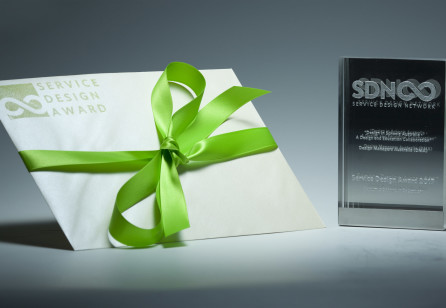
Service Design Award 2018 - The Finalists
SDN has announced all Service Design Award 2018 finalists, whose work is internationally recognised as a benchmark of world-class service design.
Get all the latest service design news. We keep you up to date with key opinions and the latest innovation.
SDN has announced all Service Design Award 2018 finalists, whose work is internationally recognised as a benchmark of world-class service design.
26 national laws concerning physical planning, flood protection, and environmental planning have been rewritten into one new law: the Environmental Planning Act. Our client, responsible for the design, construction, management and maintenance of the main infrastructure facilities in the Netherlands, aims at offering all information through one digital portal (Digitaal Stelsel Omgevingswet) and by doing so,simplifying the process of requesting (environmental) permits for activities such as building a shed opening an establishment.
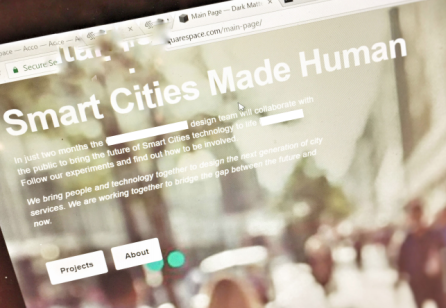
In 2017, the Federal Government announced a funding opportunity for municipalities related to Smart Cities. As our municipality considered a bid, the dominant question being asked was: What can technology offer the city? Our internal client approached the innovation lab and asked a more difficult question that framed the challenge for this project: How could we ensure we were thinking about not just a technology and data-enabled city, but also a smart city that worked for people?
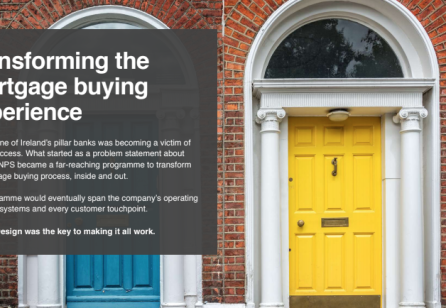
Our client, BankCo, is one of Ireland’s pillar banks and the market leader for mortgages. But in 2016, it was becoming a victim of its own success. A surge in mortgage applications put pressures on its ability to deliver a seamless experience for every customer. What started as a problem statement about declining NPS became a far-reaching programme that would eventually span the company’s operating model, processes, IT systems and every customer touchpoint. Service Design was the key to making it all work.
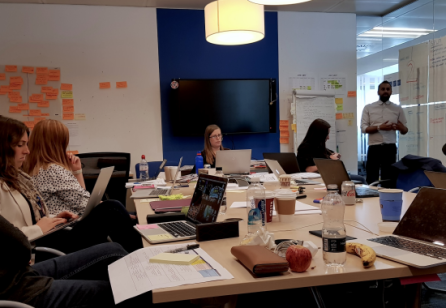
Codenamed Da Vinci, this global programme is transforming BT's 13,000-person IT department to become ‘an IT service provider of choice’. The project is shining a light across the wider enterprise on how to run service design-led transformation at scale. In June 2017, this FTSE100 Telecoms organisation was experiencing some commercial and cultural turbulence. A merger, an accounting scandal, negative press coverage and Brexit was impacting staff sentiment and share prices. Our project takes places inside the IT organisation which had just undergone significant organisational restructuring.
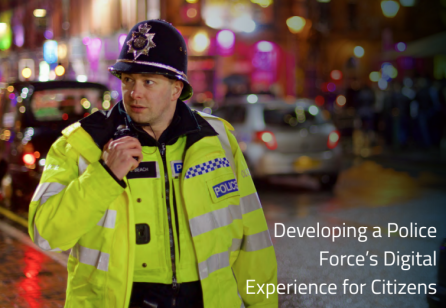
In 2014, one of the largest police forces in the UK committed to a radical transformation programme that would help the force meet current and future policing needs, manage citizen expectations and reduce cost across its operations. Part of this transformation includes improving public contact and defining new channels through which the police could respond to citizens’ needs—not only in a more efficient and effective way, but in a more inclusive way as well.
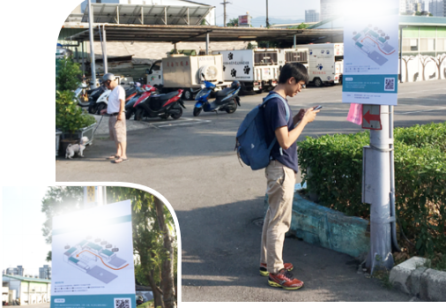
CON+ is an innovative service design that aims to improve the process of stray animal adoption in animal shelters with both online and offline channels. It covers different parts from pre-adoption data collection to post-adoption problem-solving. With the new adoption service, we lighten the workload of staff of the shelter, increase effective adoption rate, and align resources from volunteers, the shelter, and other organizations. Hundreds of thousands of stray dogs yearly are to find a home.
A leading UK bank asked our design practice to partner with them to design a complaints experience that would turn customers who have had their complaint resolved into advocates; empower customer service representatives to do their jobs more efficiently, and identify opportunities for long-term service improvement.
The intelligence augmentation design toolkit and the associated workshop demystifies machine learning and helps non-tech experts to create smart service concepts. Using the toolkit requires neither a technical background nor any coding skills. The toolkit consists of four sets of cards, a map, two canvases and a booklet.
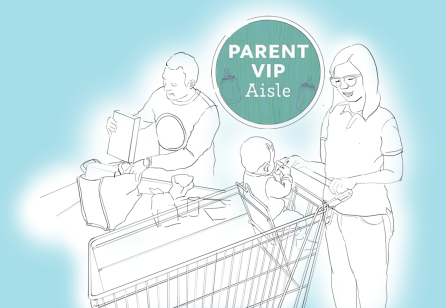
The service design project was given an objective to create a compelling value proposition and to design a differentiating customer experience for parent and baby shoppers to visit the stores and for those already using the stores, to spend more active shopping time within the store. In addition to increasing footfall, the aim was to drive significant revenue growth in this shopper segment both in the baby category and in the overall stores.
In the UK, there are more than 11,500 new cases of brain tumours every year, which is equal to a 34% increase in the incidence rate of a brain tumour since the 90s. At least 102,000 children and adults are currently living with a brain tumour in the UK alone. This report introduces Alke, a service for people with brain tumours and their carers, that helps them understand, adapt and easily manage their rehabilitation on a daily basis.
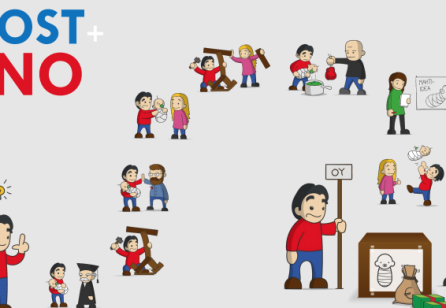
We created a Boost+Inno service hub for innovators to boost innovations. Our university faced a challenge: R&D work was not generating innovations. The university could produce an excellent level of research and development activities (R&D) but in innovation activities the results were low. Hence, the context of this project was academia and the industry sector was university research.
Our client wanted to improve their debt collection experience, making it easier for consumers to pay their debts, helping them in the refinancing process, and improving customer loyalty towards the State Bank. On the other hand, our team realized that our client had the opportunity to become the public entity to tackle the social issue of defaulting on debt, creating a unique proposal in the industry.
Innovationsguiden is an ongoing project that aims to support and reinvigorate the Swedish public sector in collaboration with citizens through service design. This is done by providing various forms of support to municipalities, county councils and regions to work with user-driven innovation in their development work. Our client is a national members and employers’ organisation for local government in Sweden. Our brief was to provide support to public organisations who wanted to strengthen their employees' innovation skills and create new and better public services based on user needs.
“Kraftens Hus” is a social innovation project based in Sweden designed by, for and with cancer-affected. A collective user-driven design work led by a service designer has resulted in the establishment of a sustainable NGO, an open meeting place and a new way of working for the involved parts.
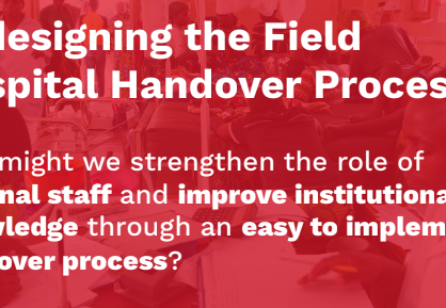
Ineffective handover is wasting a significant portion of doctors’ and hospital management staff time in a humanitarian non-governmental organization which delivers medical care worldwide. In the fast-paced environment, with human lives at stake, effective handover is essential.