


20 Touchpoint articles in this issue
Touchpoint overview
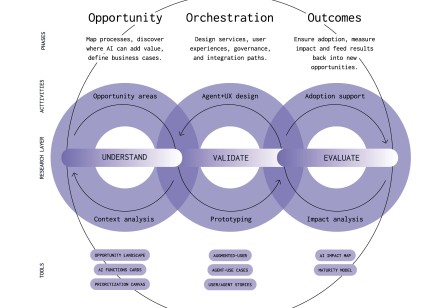
Service Design for AI Impact Measurement
A framework for capturing what AI really delivers in hybrid services Classical design models rarely address what happens after AI deployment. But when people work alongside algorithms, value often emerges in unexpected ways: shifted cognitive loads, reshaped knowledge flows and transformed worker identities. This article presents a framework and case study for measuring AI impact beyond efficiency metrics.
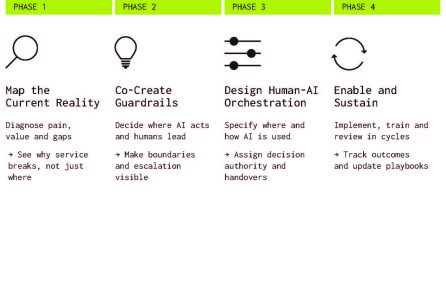
From Service Blueprints to Transformation Blueprints
Adding diagnostic and orchestration layers for AI integration – Customer service teams are flooded with repetitive queries, while complex cases requiring empathy and judgement suffer. AI can help take care of the repetitive queries, yet risks eroding human connections with customers. This article presents a four‑step approach by which service designers can extend service blueprints to identify automation opportunities with front-line teams, so that AI handles routine tasks while safeguarding relationships and expertise.

From Collaboration to Co-Performance
Designing accountability in AI-enabled services – Artificial intelligence systems (AI, specifically data-driven systems that generate predictions, classifications or recommendations based on statistical models and/or machine learning techniques) are increasingly used in service design and delivery, embedded in service processes, influencing how decisions are prepared, prioritised and executed. As their role becomes more prominent, it becomes relevant to clarify how responsibility is structured when humans and AI (or AI-enabled) systems both contribute to service outcomes.
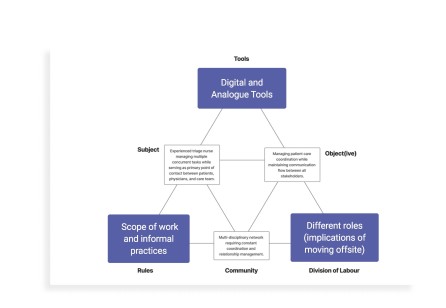
Designing Transitions, Not Just Technologies
Why AI triage keeps failing in practice – Care work, long considered deeply human, is increasingly intertwined with technology and its promises of efficiency, personalisation and accessibility. In healthcare, these pressures are especially visible in triage, where rising patient volumes and persistent nursing shortages have intensified the demand for faster and more scalable ways of assessing patient needs.
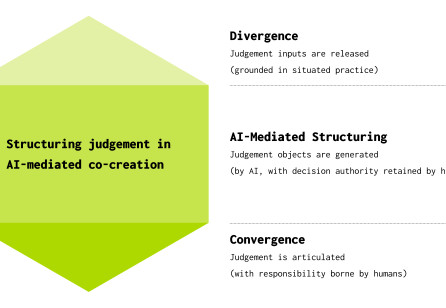
Designing Judgement in AI-Mediated Co-Creation
A service design view on judgement Co-creation is widely adopted in service design, yet participation often fails to translate into influence. This article argues that the challenge lies in asking co-creators to generate ideas rather than to exercise judgement. It proposes that designers utilise AI as a structural enabler to shift co-creation from joint creation towards joint judgement.
Prototyping Civic Futures with Legible AI
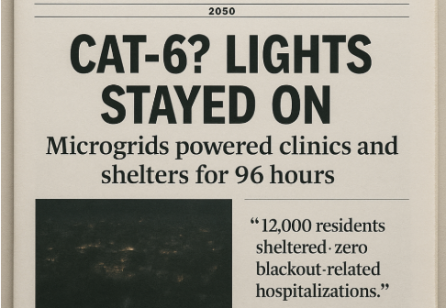
A practice-based case study from St Petersburg’s Historic Gas Plant District – On 1 November 2025, the School of Creativity & Innovation and the Sierra Club ran a one-day design sprint in St Petersburg, Florida, to reimagine the Historic Gas Plant District (HGPD) for a 100-percent clean-energy future. With 45 participants, it used generative AI for prototyping, while service design safeguarded trust, transparency and agency.

Designing for Flow
Service designers have always been translators – understanding human needs and organisational constraints to shape services people want. What is changing is the medium of design. AI is no longer simply a tool that supports research or accelerates artefact production; it is becoming a collaborator in the design and delivery of services.
The Role of AI in Participatory Workshop Design and Facilitation
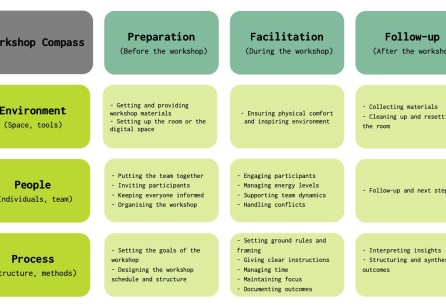
Facilitatory insights across preparation, execution and follow-up – Over the past few years, artificial intelligence tools have rapidly and almost invisibly become embedded in the everyday practice of service designers. Several parts of the design process, such as research, synthesis, documentation or even early concept development, are now often difficult to imagine without some form of AI support.
Co-Designing LLM-Assisted Persona Creation
Generative AIs or LLMs such as ChatGPT are increasingly used in service design synthesis. This article discusses research developing personas through human-led and AI-assisted processes during community engagement research. It identifies subtle narrative shifts and proposes community-anchored practices to retain interpretive accountability. Interpretation, ultimately, remains human work.
Mapping AI Use in the Employee-centric Hybrid Workplace
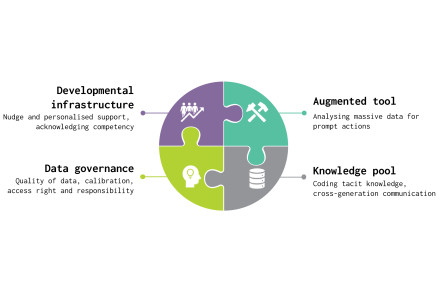
Hybrid work is now routine in many organisations, with employees working across home, office and on-site locations. At the same time, AI, and particularly Large Language Models(LLMs), are becoming embedded in everyday work – from simple information search and drafting support to AI-enabled enterprise platforms such as Enterprise Resource Planning (ERP) systems. However, the speed of AI development often outpaces the organisational decision-making process.
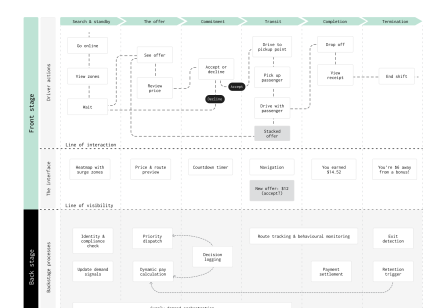
Ghost Touchpoints and the Visible Intent Layer
The paradox of modern services is that they have never felt more straightforward; yet, they have never been less transparent. As these systems grow more sophisticated, their inner workings become harder to see, making it difficult for people to understand how they are being shaped.
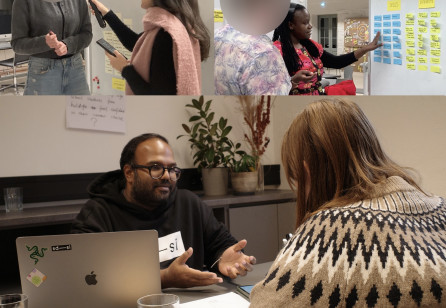
Echoing Futures: Prototyping an AI Mentor
Prototyping an AI mentor to spark civic imagination in young people This article presents ‘Echo’, a student project developed within the Service Design and Strategic Innovation (SDSI) master programme in collaboration with the European Movement Latvia. It explores how we reframed youth civic disengagement as a challenge of personal relevance and prototyped an AI-assisted tool linking career aspirations with civic imagination.
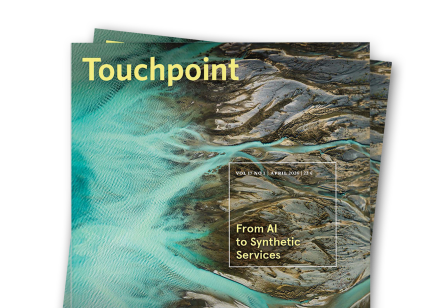
Editors Letter | From AI to Synthetic Services
AI continues to disrupt our work as service designers, fundamentally changing the way we design, deliver and analyse services. The advances are rapid as well, presenting new opportunities while at the same time forcing us to answer some challenging questions on where and how its capabilities are deployed. This issue of Touchpoint answers an ongoing need in our community to learn from each other - as well as those outside our field - to confidently apply AI, as well as know where it should be avoided.
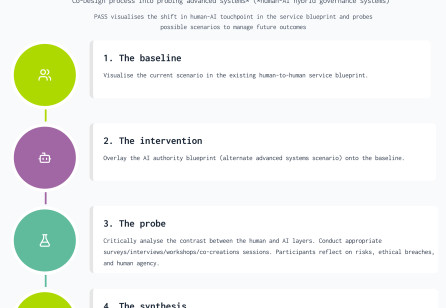
Making AI Authority Legible and Contestable for Public Services
AI is increasingly shifting from a supporting tool to an active actor in public services. In September 2025, Albania announced ‘Diella’, an AI-based virtual cabinet role for public procurement, aimed at reducing corruption and increasing transparency.
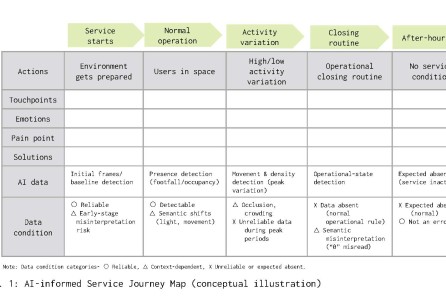
Surfacing Early Readiness Gaps in AI-Enabled SaaS Projects
In an early-stage deployment of an AI occupancy solution for a highway service-area restaurant, a recurring pattern emerged: after 20:00, the system consistently reported a ‘0’ for the ‘Glass House’ seating zone. Drawing on SaaS and IT heuristics, the engineering team flagged this flat zero as a likely malfunction – investigating camera misalignments, pipeline glitches or model failures.
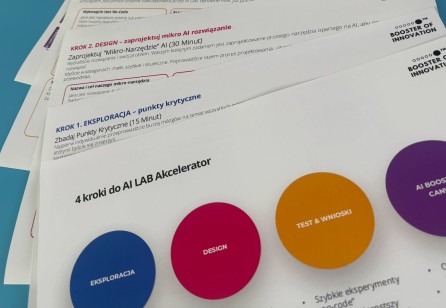
AI Strategy as the Foundation of Service Design | Designing AI Strategy, Not Just AI Systems
Before you launch a service design project, have an AI strategy first Service design is increasingly expected to integrate AI. Yet in many organisations, AI enters too late — at the level of features rather than strategy. The result is predictable: fragmented services, local optimisation and concepts that quickly lose relevance as technology and expectations evolve.
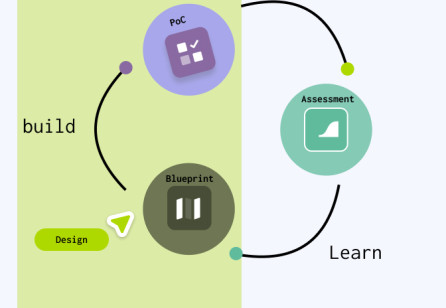
Orchestrating Co-performance in Healthcare
Evolving blueprints to manage complex ecosystem Operating within Brazil’s Unified Health System (Sistema Único de Saúde, or SUS), the world's largest public health infrastructure, requires a fundamental paradigm shift for any designer.
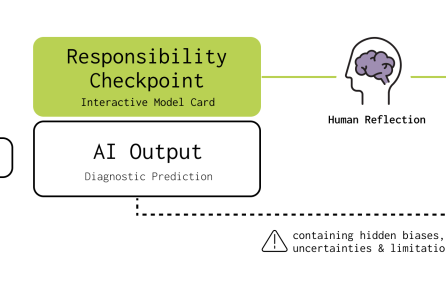
Designing Responsibility in Human–Machine Interaction
We often talk about AI as if it were merely a tool: predictable, controllable and at our service. This image begins to falter as AI-driven services become more complex and their decision-making processes less transparent – especially when proprietary systems operated by companies are used in areas such as health, safety or law.
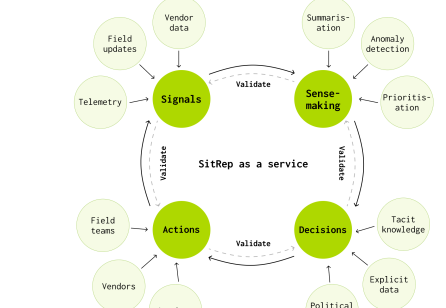
Designing Human + AI Co-Performance in Emergency Management
From static reports to dynamic decision support When a hurricane hits, people experience the impact in intensely human ways: families need shelter, hospitals need power, roads need to reopen and communities need reliable information. In those moments, emergency management becomes a mission‑critical public service; one most people rarely think about until they need it.
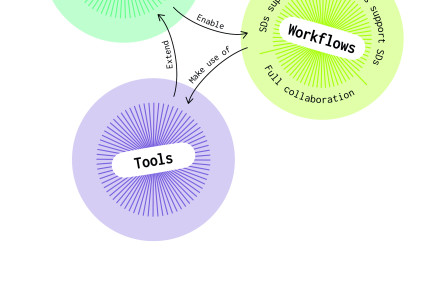
Bridging Service Design and Data Engineering
A working knowledge and practical understanding of data technologies can help service designers to co-operate with practitioners from the field of data engineering. This collaboration can amplify the impact of design choices and open new ways of thinking about services and data.
