IN FLUX Service Design Conference

The conference successfully enabled connections between service designers and researchers. The event created an opportunity for 300 attendees from the private sector, government, academia and NGO's to come together to shape the conversation of a design discipline still finding its voice in Canada. Conference videos and slides are being uploaded if you would like to take a look.

 “Like so many of you, I have had to travel far abroad to hang out with my service design tribe – it’s great that I can now do it in Canada” Gordon Ross, speaker

On December 1, IN FLUX, Canada’s first national Service Design Canada conference, brought together a sold-out audience of 300 service design practitioners, researchers, leaders, students and enthusiasts from across Canada to the Rotman School of Management at the University of Toronto. The conference marked the culmination of a landmark year in service design in Canada that started with the launch of the Canadian chapter of the Service Design Network and continued with local events throughout the year in Toronto, Montreal, Vancouver and Regina.

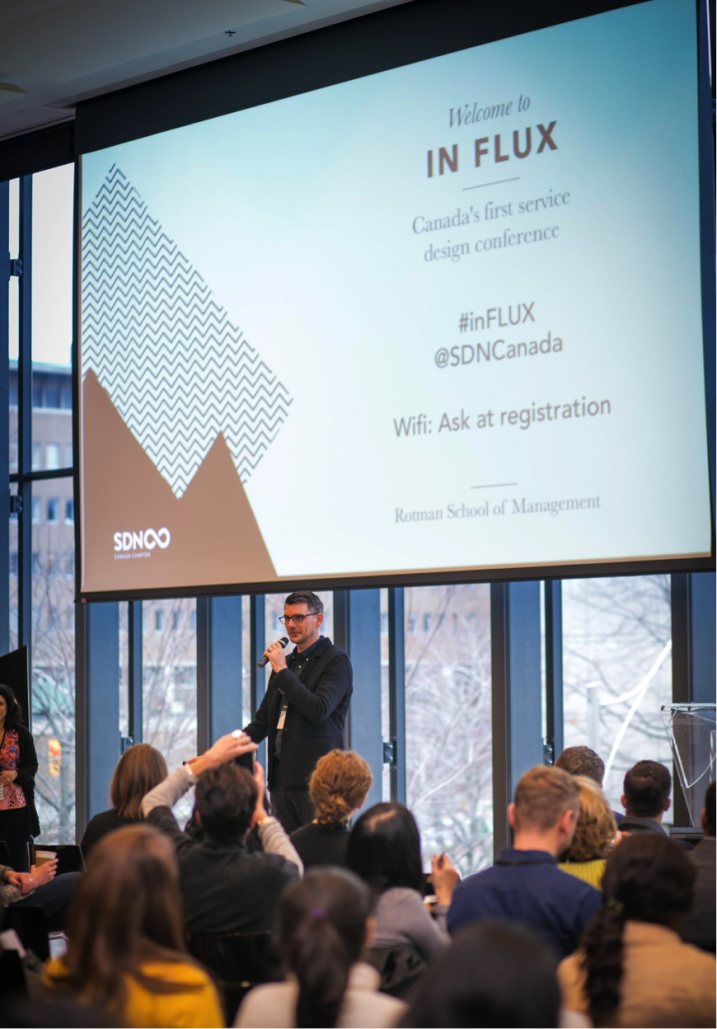
Conference chair Chris Ferguson welcomes the sold-out audience of 300 to IN FLUX.
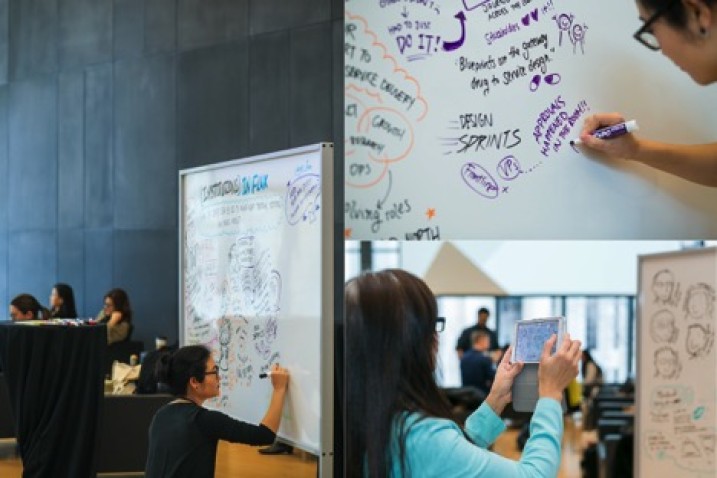
Systems designer Jessica Fan captured the all of the presentations and panel discussions in real-time, providing a visual summary of the ideas and themes of the day on massive rolling whiteboards that attendees explored, photographed and posted to social media.

Presented by Rotman DesignWorks at the University of Toronto, in partnership with the Service Design Network Canada, IN FLUX attracted attendees from 8 of Canada’s 10 provinces - ranging from British Columbia on the Pacific Coast to Nova Scotia on the Atlantic Coast - and representing design firms, the private sector, government, non-profits and community organisations.

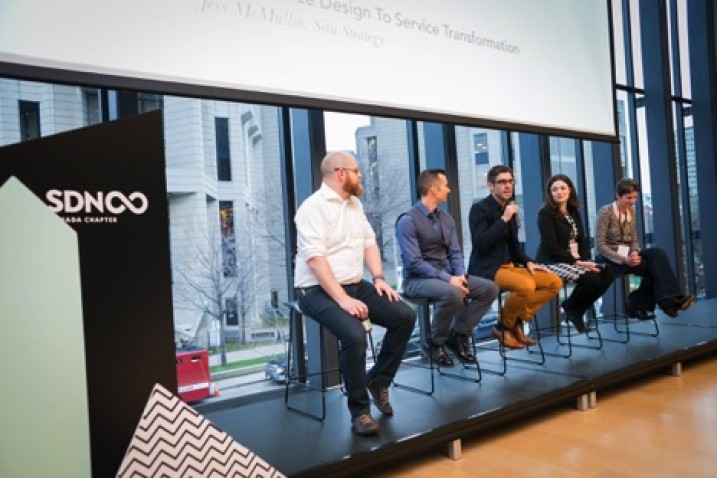
Regulations IN FLUX speakers answering questions during the Questions & Answers session.

The theme of the conference was IN FLUX, a recognition that the products of the past are quickly being joined or replaced by the services of the future, requiring new hybrid skills, tools and thinking for managing people and resources. As IN FLUX conference chair Chris Ferguson noted, “Unlike product design, service design is focused on managing the risks of the invisible.”

1. Institutions IN FLUX: Can Service Design be used to manage and adapt traditional institutions and business models?

      “Scaling Service – Delivering an exceptional end-to-end experience in high-growth context” – Christine Zoltok, Breather (presentation slides)

      “Introducing Service Design in the Corporate Environment” – Jason Fiske, Farm Credit Canada (presentation slides 

2. Practice IN FLUX: How do we communicate the value of Service Design?

Panel Discussion: “The evolving nature of how we communicate and sell Service Design to organisations” (presentation slides)

      Jonathan Veale, Civic Innovation YYC / City of Calgary

      Joelle Stemp, Yu Centrik

      Tamsin Smith, Harmonesse Service Design

      Richard Z'Graggen, LVL Studio

3. Regulations IN FLUX: Can Service Design provide a path forward amidst complex regulatory and policy changes?

      Service Design in BC's Justice Sector – Gordon Ross, OpenRoad and Kevin Conn, BC Ministry of Justice (presentation slides)

      “ Embedding Service Design in a Pharmaceutical Company: The Universal Patient Language” – Susan Bartlett, Bridgeable and Elizabeth Turcotte, Bristol-Myers Squibb

      “From Service Design To Service Transformation” – Jess McMullin, Situ Strategy (presentation slides)

4. People IN FLUX: Does Service Design provide a way to understand and satisfy people's changing needs and expectations?

      “ Kudoz: How a learning platform shifts behaviors of people and procurement” – Jonas Piet and Sarah Schulman, InWithForward (presentation slides)

      “Welcome Home: Designing the Intake Experience for Incoming Syrian Refugees to Canada” – Justin Kirkey, Healthcare Human Factors (presentation slides)

      “How empathy could move Montréal’s Parc La Fontaine into the 21st century” – Annemarie Lesage, Yu Centrik

      “Meeting people where they’re at…” –  Janice Wong and Sarah Reid, Doblin (presentation slides)

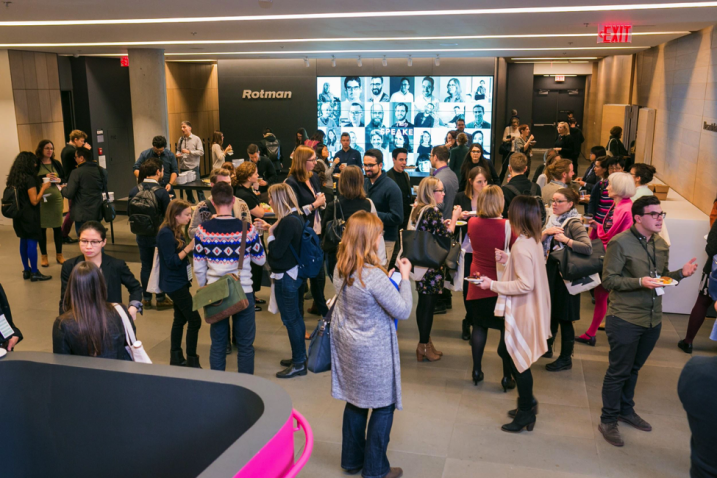
IN FLUX attendees had lots of opportunities to connect with peers from across Canada throughout the day.
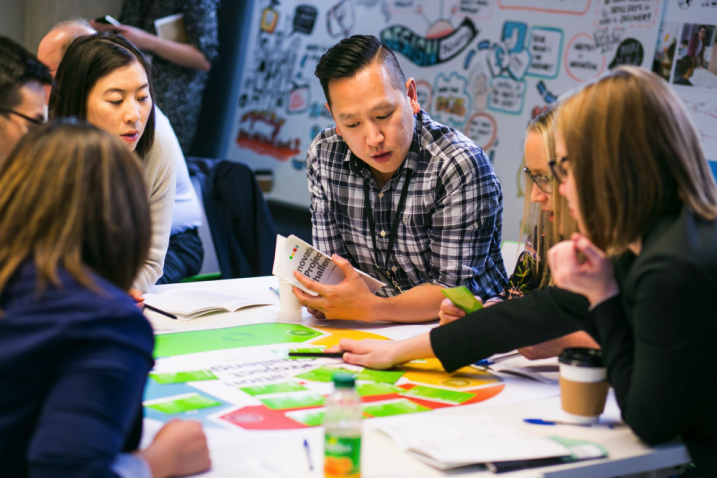
Participants colloborating during the Innovation Project Challenge workshop led by Simon Mhanna and Greg Judelman of The Moment.

Related Headlines

SDN Chapters Register by May 15 for the maximum Early Bird discount!

Register by May 15 for the maximum Early Bird discount!

Connect, Collaborate, and Create Change – SDGC26 Awaits! Join us in Wiesbaden, Germany and online, 28–30 October. Registration is open, with Early Bird tickets on sale until May 15.

Continue reading
SDN Chapters Touchpoint 17-1––From AI to Synthetic Services | Roundtable

Touchpoint 17-1––From AI to Synthetic Services | Roundtable

On May 20th 2026, we are holding a special event connected to the publication of the most recent issue of Touchpoint, the journal of service design: Touchpoint Vol.17 No. 1 | From AI to Synthetic Services.

Continue reading
SDN Chapters From AI to Synthetic Services

From AI to Synthetic Services

AI continues to disrupt our work as service designers, fundamentally changing the way we design, deliver and analyse services. The advances are rapid as well, presenting new opportunities while at the same time forcing us to answer some challenging questions on where and how its capabilities are deployed. This issue of Touchpoint answers an ongoing need in our community to learn from each other - as well as those outside our field - to confidently apply AI, as well as know where it should be avoided.

Continue reading
SDN Chapters Touchpoint Vol. 17 No. 3 | Call for papers is now open

Touchpoint Vol. 17 No. 3 | Call for papers is now open

We are pleased to announce that the call for papers for Touchpoint Vol. 17 No. 3 is now open.

Continue reading