

SDN Accreditation: Explore Our New Programme
The SDN Accreditation Programme, initiated in 2017, is continuously developing to meet our growing community's needs and expectations, and we are pleased to share with you our latest developments:

Browse all Touchpoint Articles
The SDN Accreditation Programme, initiated in 2017, is continuously developing to meet our growing community's needs and expectations, and we are pleased to share with you our latest developments:
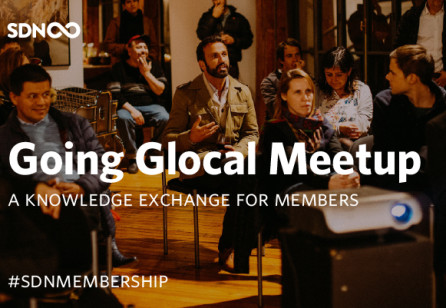
The world is a rapidly-evolving landscape. Organisational complexity is growing, user expectations are intensifying and the digital landscape's on-going evolution finds service designers squarely faced with the challenges and opportunities that come with the next wave of change.
The Service Design Award, curated by the Service Design Network, is the first international service design award to recognise the service design community’s achievements in both the public and private sectors.
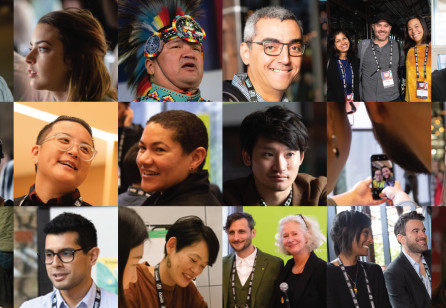
Diversity, Equity and Inclusion (DEI) can only genuinely come to life when they permeate all systems within an organisation

In this issue's Profile, Natalie Kuhn chats with Touchpoint Editor-in-Chief Jesse Grimes about her roles and ambitions.
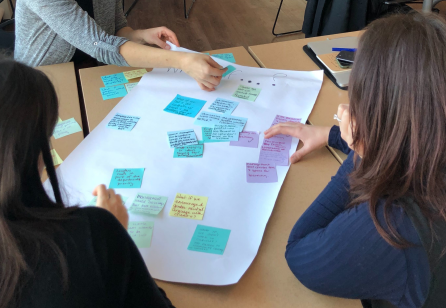
This article shows how a systemic design approach was used to support the implementation of a policy direction that touches multiple services and organisations. It discusses how a team of designers and policy makers mobilised services to action through breaking silos, building empathy and developing a community of practice.
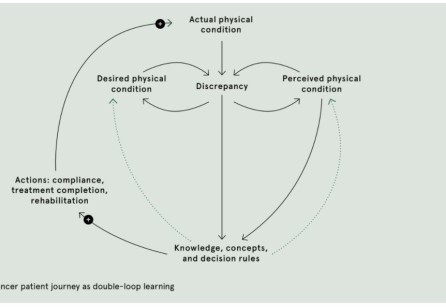
A journey map is a useful and widely-applied tool in service design that implicitly assumes the journey to be linear in structure. However, some episodes of a journey may repeat, forming loops, such as patients receiving treatments that must be administered several times.
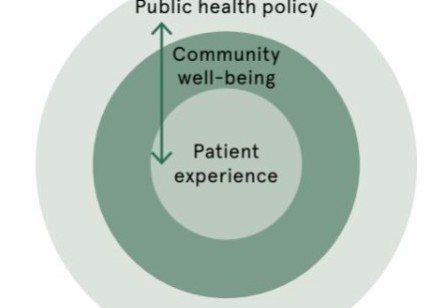
Service designers often need to navigate complex ecosystems of services in order to understand the interactions amongst actors and to understand how value is being co-created. The advancement of emerging technologies has introduced additional complexity to the existing service systems which are foundational to the connected service economy.
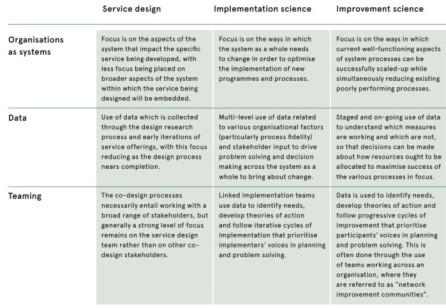
As service design continues to develop, work from other disciplines may help provide ways to broaden our practice and provide increased value for our stakeholders, both internal and external. This article looks at two emergent disciplines – improvement science and implementation science – to see how to integrate aspects of these disciplines within our existing service design practice.
As a design community, we have developed certain paradigms over the past decades which have provided us with guidance in our daily work. In an increasingly complex world, we are now challenged to reconsider all of them, and adapt a more holistic perspective.
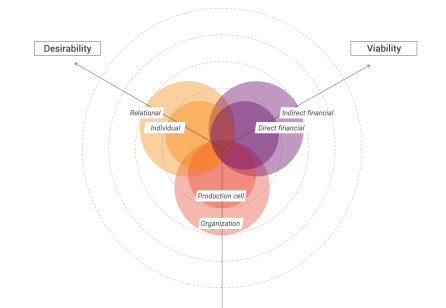
Most service designers, when working with large organisations, have been confronted with the seemingly incomprehensible dynamics that come with complex systems. As service design matures, we get to see more and more of the ‘belly of the beast’, confronting us with a complexity and interconnectedness that is challenging, but also very interesting to work on.
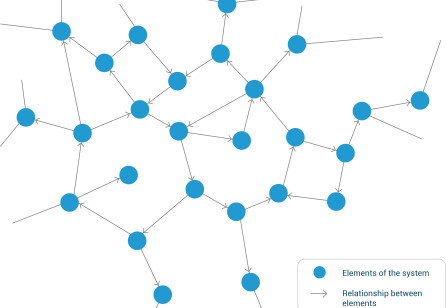
Existing approaches employed in service design are primarily anchored in establishing linear ‘cause and effect relationships’. This article highlights the dangers of utilising linear thinking to address the complexities of service design and provides insights into how non-linear systems thinking could result in far more adaptive, meaningful and comprehensive services.
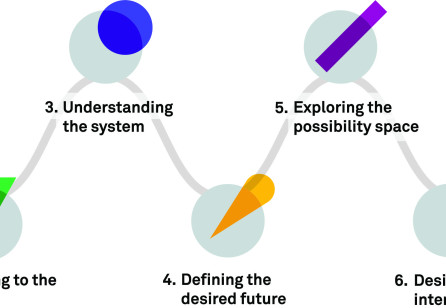
The Systemic Design Toolkit provides the only complete systems methodology for designers, with over 30 system modelling canvasses designed for participatory workshops. Validated through dozens of applications, academic training and workshops, the Toolkit bridges systems thinking, human-centred design and service design approaches to address complex systems contexts.
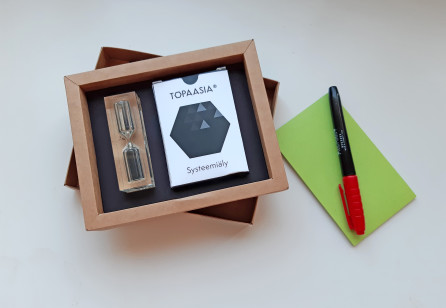
In this article, we discuss the advantages of systems intelligence (SI) for organisational service design, and how to apply its principles. Systems intelligence is a combination of systems thinking and pragmatic approaches, implemented together with a philosophy of life.
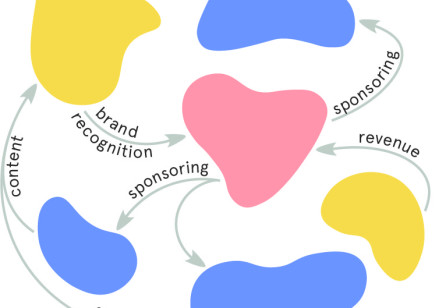
In the 1950s, Walt Disney recognised the potential of building organisational ecosystems and extending his brand into other industries. How did he identify opportunities? How did he decide which ones to take advantage of and which trade-offs to make?
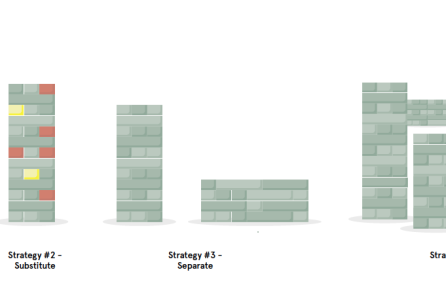
During the COVID-19 crisis, the Innovation team at University Hospitals of Cleveland worked with caregivers to design a touchless patient experience. Four strategies were used to deconstruct and reconstruct the conventional elements of the service blueprint framework in order to make them useful and appropriate for pandemic response and recovery.
